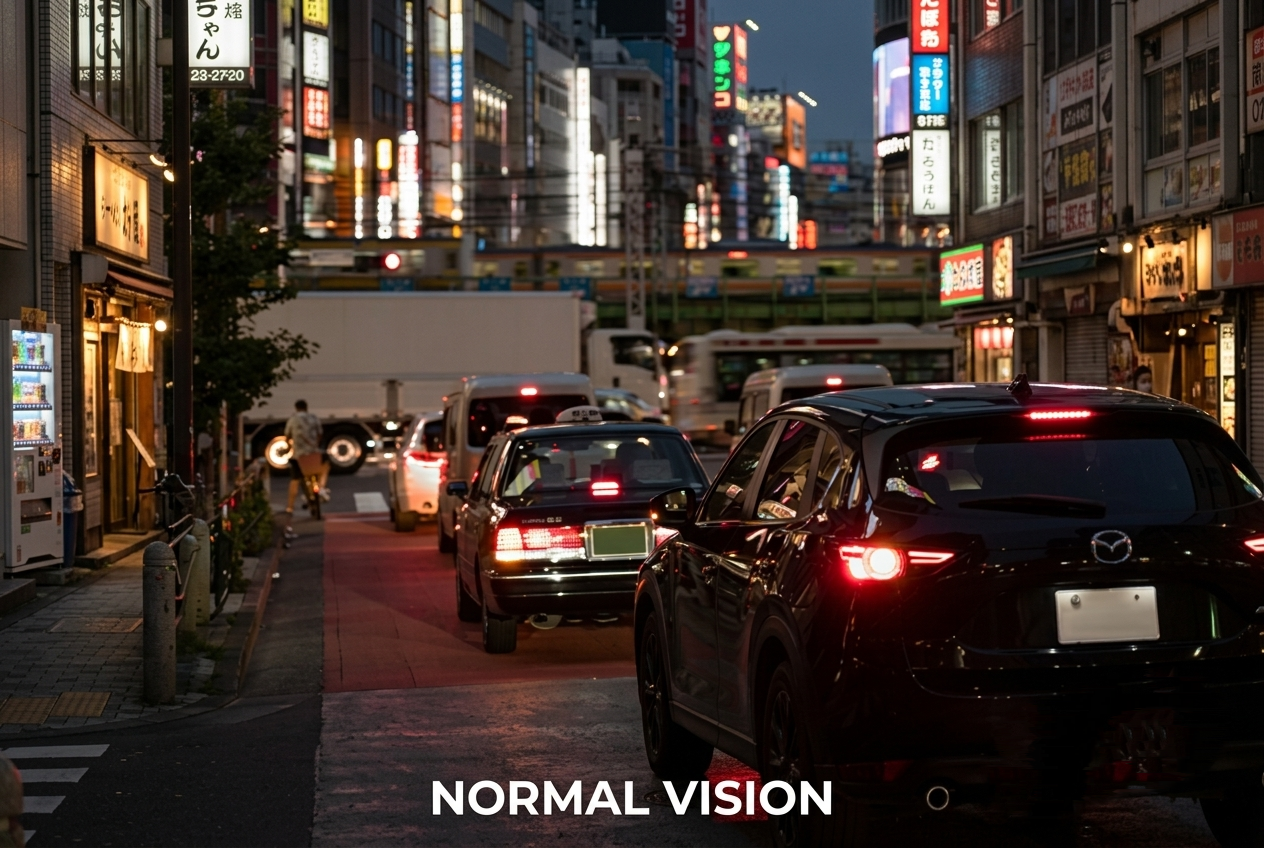
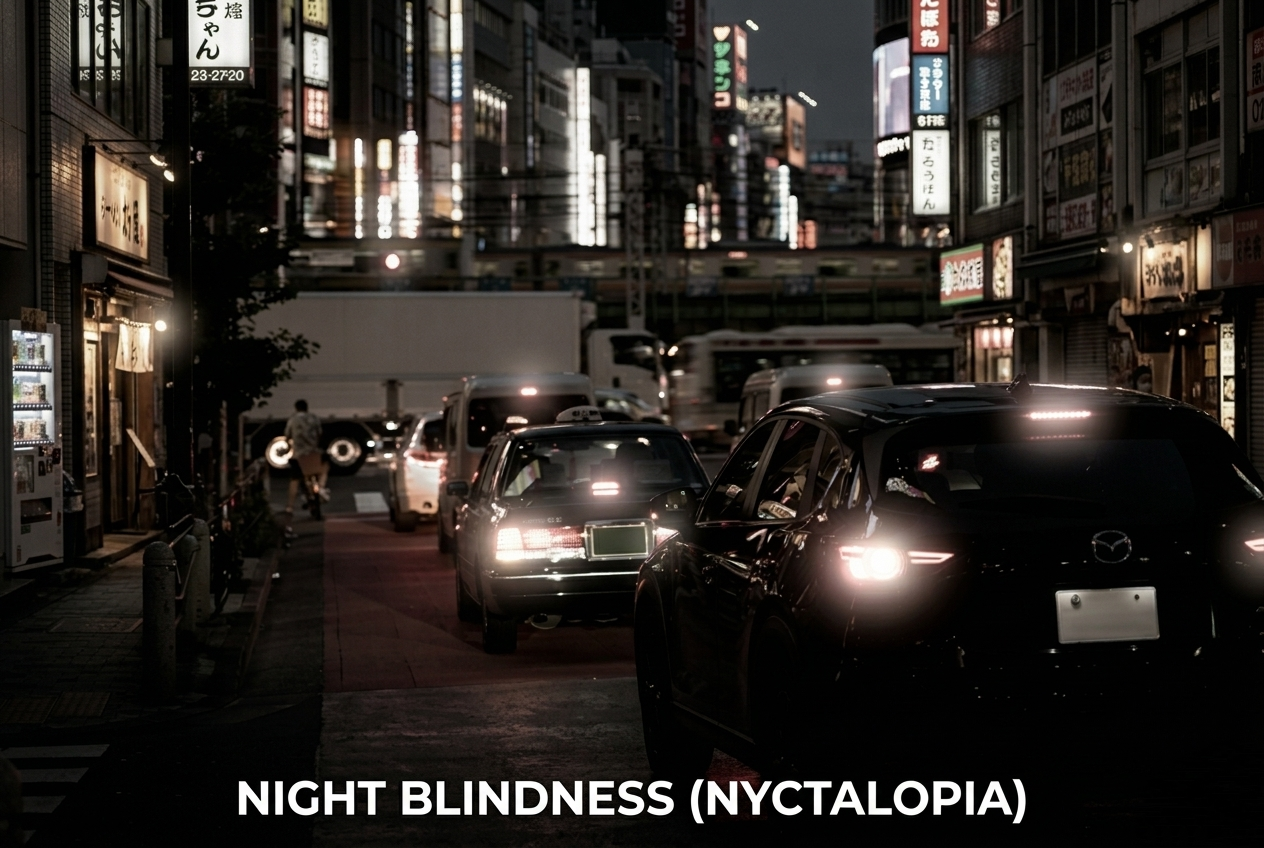
Night blindness, also known as nyctalopia, is a visual condition in which the eyes have difficulty functioning effectively in low-light or dark environments. It is not a disease in itself but a sign of underlying ocular or systemic problems affecting the retina, the light-sensitive tissue at the back of the eye. The retina contains photoreceptor cells—rods and cones—that detect light and transmit signals to the brain to produce vision. Rod cells are primarily responsible for vision in dim lighting, and any dysfunction or degeneration of these cells can lead to night blindness.
Night blindness can result from several causes. Vitamin A deficiency is a common nutritional factor, as this vitamin is essential for the production of rhodopsin, a pigment critical for rod function. Genetic disorders, such as retinitis pigmentosa, can progressively impair rod cells and compromise low-light vision. Other contributing factors include retinal degenerative diseases, cataracts, glaucoma, or conditions that interfere with light perception or transmission in the eye.
Diagnosis is achieved through a comprehensive eye examination, including retinal evaluation and tests of visual function, as well as assessment of underlying systemic conditions. Management focuses on treating the root cause. We treat you with medicine only, providing a safe, non-invasive approach to support vision in low-light conditions