Introduction
Technology has become an inseparable part of modern life. In 2026, people spend more time on digital devices than ever before. From remote work and online classes to social media, gaming, and virtual meetings, screens dominate both professional and personal routines. Laptops, smartphones, tablets, and smart displays help people stay connected and productive, but excessive screen exposure has also created a growing health concern — digital eye strain.
Millions of people now experience tired eyes, headaches, blurred vision, dryness, and difficulty concentrating after long hours of screen use. Many professionals spend eight to twelve hours daily in front of digital devices without giving their eyes enough rest. Children and teenagers are also facing similar problems because of online learning and increased mobile usage. As screen time continues to rise, eye specialists are encouraging people to adopt healthier digital habits to protect their vision.
One recommendation that has remained popular for years is the 20-20-20 rule. Eye care experts have long suggested this simple technique as an easy way to reduce eye strain caused by prolonged screen exposure. However, with modern technology evolving rapidly and people using high-resolution screens for longer hours than ever before, many individuals wonder whether the 20-20-20 rule is still effective in 2026.
The answer is yes. The 20-20-20 rule continues to be one of the simplest and most effective methods for reducing digital eye strain. However, experts now believe that it works best when combined with proper posture, healthy screen habits, regular breaks, and good lighting conditions. Understanding how the rule works and how to use it correctly can help people maintain better eye comfort and improve overall digital wellness.
What Is Digital Eye Strain?
Digital Eye Strain, also known as Computer Vision Syndrome, refers to a group of eye and vision-related problems caused by prolonged use of digital screens. Unlike printed books or paper documents, digital displays force the eyes to work harder because text on screens is made of tiny pixels that are less sharply defined. The eyes continuously adjust focus while dealing with glare, brightness, contrast changes, and screen flickering.
When people stare at nearby screens for several hours without proper breaks, the eye muscles remain constantly active. Over time, this continuous effort causes fatigue and discomfort. Digital eye strain may not permanently damage eyesight in most cases, but it can seriously affect comfort, concentration, productivity, and sleep quality.
According to eye care professionals, the increasing dependence on screens is one of the biggest reasons behind rising cases of visual fatigue worldwide. In today’s digital environment, protecting eye health has become more important than ever.
Common Symptoms of Digital Eye Strain
The symptoms of digital eye strain can vary from person to person. One of the most common complaints is dry eyes. People naturally blink less while looking at screens, causing tears to evaporate quickly. This often leads to irritation, redness, burning sensations, and watery eyes.
Blurred vision is another frequent symptom. After long hours of screen exposure, the eyes may struggle to maintain focus properly. Some individuals find it difficult to read text clearly, while others experience temporary difficulty focusing on distant objects.
Headaches are also strongly linked to excessive screen time. Continuous focusing effort, poor lighting, and screen glare place pressure on the eye muscles and surrounding nerves. These headaches usually occur around the forehead, temples, or behind the eyes.
Many people also experience neck pain and shoulder stiffness because poor posture often accompanies prolonged screen use. Sitting in incorrect positions while working on laptops or mobile devices increases physical strain on the body.
Another growing issue in 2026 is poor sleep quality caused by nighttime screen exposure. Blue light emitted from digital devices can interfere with melatonin production, making it harder for the body to fall asleep naturally. As a result, many individuals experience mental fatigue, low energy levels, and reduced concentration during the day.
Understanding the 20-20-20 Rule
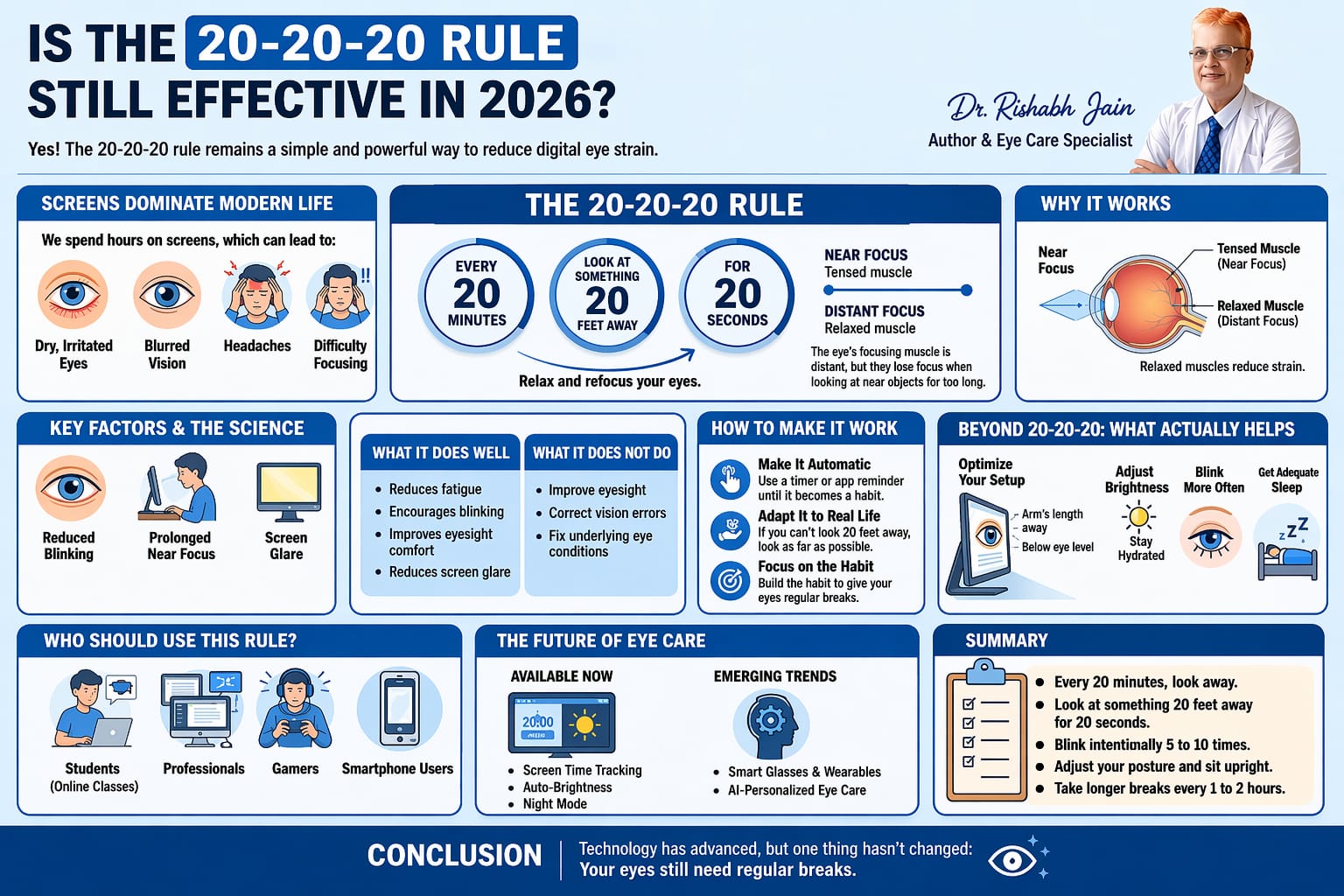
The 20-20-20 rule is a simple eye-care technique designed to reduce strain caused by prolonged near-focus activity. The rule recommends that every twenty minutes, individuals should look at an object twenty feet away for at least twenty seconds.
This short visual break allows the eye muscles to relax after continuously focusing on nearby screens. Looking at distant objects reduces pressure on the focusing system of the eyes and helps decrease temporary visual fatigue.
The rule became popular because it is easy to remember and does not require any special equipment or medical treatment. It is a practical habit that can be followed at home, in offices, schools, or anywhere digital devices are used regularly.
Why the 20-20-20 Rule Still Works in 2026
Even though modern screens are more advanced than older devices, the human eye still faces the same biological limitations. Today’s screens may offer higher resolution, reduced flickering, adaptive brightness, and eye comfort modes, but the eyes still become tired when focusing on nearby objects for long periods.
The main reason the 20-20-20 rule remains effective is that it addresses the core issue behind digital eye strain — continuous close-range focusing. Whether someone uses a high-end monitor or a smartphone, the eyes must constantly work to maintain focus during screen use.
Regular visual breaks help relax the eye muscles and reduce fatigue. In fact, the rule may be even more important today because people spend more hours on screens than ever before. Remote work, AI-powered tools, online entertainment, and digital communication have significantly increased daily screen exposure.
Eye specialists continue to recommend the 20-20-20 rule because it encourages healthier viewing habits and prevents people from staring at screens continuously for several hours.
The Science Behind the 20-20-20 Rule
The eyes contain tiny muscles called ciliary muscles that control focus. Whenever a person looks at nearby objects such as laptops or smartphones, these muscles contract to maintain clear vision. If the eyes remain focused at close distances for too long, the muscles become tired and strained.
The 20-20-20 rule works by giving these muscles an opportunity to relax. Looking at distant objects reduces the need for close focusing and allows the visual system to recover temporarily.
The rule also encourages people to blink more naturally. Many individuals blink less frequently while concentrating on screens, which contributes to dryness and irritation. Short visual breaks help restore normal blinking patterns and improve tear distribution across the eyes.
Research from organizations such as the American Optometric Association suggests that regular breaks during screen use can help reduce symptoms associated with digital eye strain and improve visual comfort.
Limitations of the 20-20-20 Rule
Although the 20-20-20 rule remains highly beneficial, it is not a complete solution for every eye-related problem caused by screen use. Digital eye strain is influenced by multiple factors, including poor posture, inadequate lighting, blue light exposure, lack of sleep, and long working hours.
For example, someone who follows the 20-20-20 rule but continues working in poor lighting conditions or sits in an uncomfortable posture may still experience headaches and fatigue. Similarly, individuals who use screens late at night without reducing brightness may continue facing sleep-related problems.
Experts now believe that the 20-20-20 rule should be part of a broader digital wellness routine rather than the only solution.
Additional Ways to Reduce Digital Eye Strain
Maintain Proper Screen Distance
Screens should ideally be positioned about an arm’s length away from the eyes and slightly below eye level. Keeping the screen too close forces the eyes to work harder and increases fatigue.
Improve Lighting Conditions
Balanced lighting reduces unnecessary pressure on the eyes. Rooms should not be extremely dark or overly bright. Avoid glare from windows and use soft ambient lighting whenever possible.
Blink More Frequently
Many people unknowingly stare at screens without blinking properly. Conscious blinking helps maintain eye moisture and prevents dryness and irritation.
Reduce Blue Light Exposure at Night
Most devices now include blue light filter or night mode settings that make screens easier on the eyes during evening hours. Reducing screen exposure before bedtime can improve sleep quality and reduce mental fatigue.
Take Physical Breaks
Standing up, stretching, and walking around every hour improves blood circulation and relaxes both eye muscles and body muscles. Physical movement also reduces neck and shoulder stiffness caused by prolonged sitting.
Stay Hydrated and Eat Healthy Foods
Hydration is important for healthy tear production. Drinking enough water helps prevent dry eyes. Nutrient-rich foods such as carrots, spinach, fish, eggs, nuts, and citrus fruits also support long-term eye health.
Do Blue Light Glasses Really Work?
Blue light glasses remain popular in 2026, especially among professionals and gamers who spend long hours on screens. Some users report reduced eye fatigue and better sleep quality after using them.
However, experts generally agree that healthy screen habits are more important than relying only on glasses. Taking regular breaks, improving posture, reducing nighttime screen use, and following the 20-20-20 rule remain the most effective methods for reducing digital eye strain.
How Digital Technology Is Changing Eye Health
The rise of AI-powered workspaces, virtual reality, and augmented reality has increased visual demands even further. Many people now spend hours using smart glasses, VR headsets, and immersive digital environments.
As technology continues to evolve, eye care recommendations may also change in the future. However, one thing remains clear — the human eye still requires regular rest and healthy habits to function comfortably in a screen-dominated world.
When Should You See an Eye Doctor?
Occasional eye strain is common, but persistent symptoms should never be ignored. Individuals should consult an eye specialist if they experience severe headaches, chronic dry eyes, double vision, eye pain, or long-lasting blurred vision.
Regular eye checkups are especially important for students, remote workers, gamers, and professionals who spend several hours daily using digital devices.
Conclusion
The 20-20-20 rule remains an effective and practical method for reducing digital eye strain in 2026. Although modern screens have become more advanced, the eyes still struggle with prolonged close-focus activity caused by excessive screen exposure. Taking short visual breaks every twenty minutes helps relax the eye muscles, improve blinking patterns, and reduce temporary fatigue.
However, experts now understand that digital eye strain is caused by multiple factors, not just continuous focusing. Poor posture, blue light exposure, lack of sleep, improper lighting, and long working hours all contribute to visual discomfort. For this reason, the 20-20-20 rule works best when combined with healthy digital habits and proper workplace ergonomics.
In today’s technology-driven world, protecting your eyes is just as important as protecting your physical and mental health. Small daily habits such as taking regular breaks, maintaining proper posture, reducing unnecessary screen exposure, and prioritizing sleep can make a significant difference in preserving healthy vision for the future.