Introduction
Summer is often associated with bright sunshine, outdoor travel, vacations, and longer days. While sunlight is essential for life and helps the body produce Vitamin D, excessive exposure to ultraviolet (UV) rays can be harmful—especially for your eyes. Unlike skin damage, which can be seen and felt quickly, UV damage to the eyes is often silent and gradual. Over time, it can contribute to serious conditions such as cataracts, macular degeneration, and corneal damage.
In modern life, people spend more time outdoors during summer—whether for work, driving, sports, or travel—without realizing how much UV exposure their eyes are receiving. Even cloudy weather does not fully block UV rays, which makes protection necessary every single day.
The good news is that protecting your eyes is simple when you follow the right habits. In this guide, we will explore how to protect your eyes from summer UV rays using sunglasses, diet, and daily habits in a practical, science-based way that you can apply immediately.
Understanding UV Rays and Why They Are Harmful to Eyes
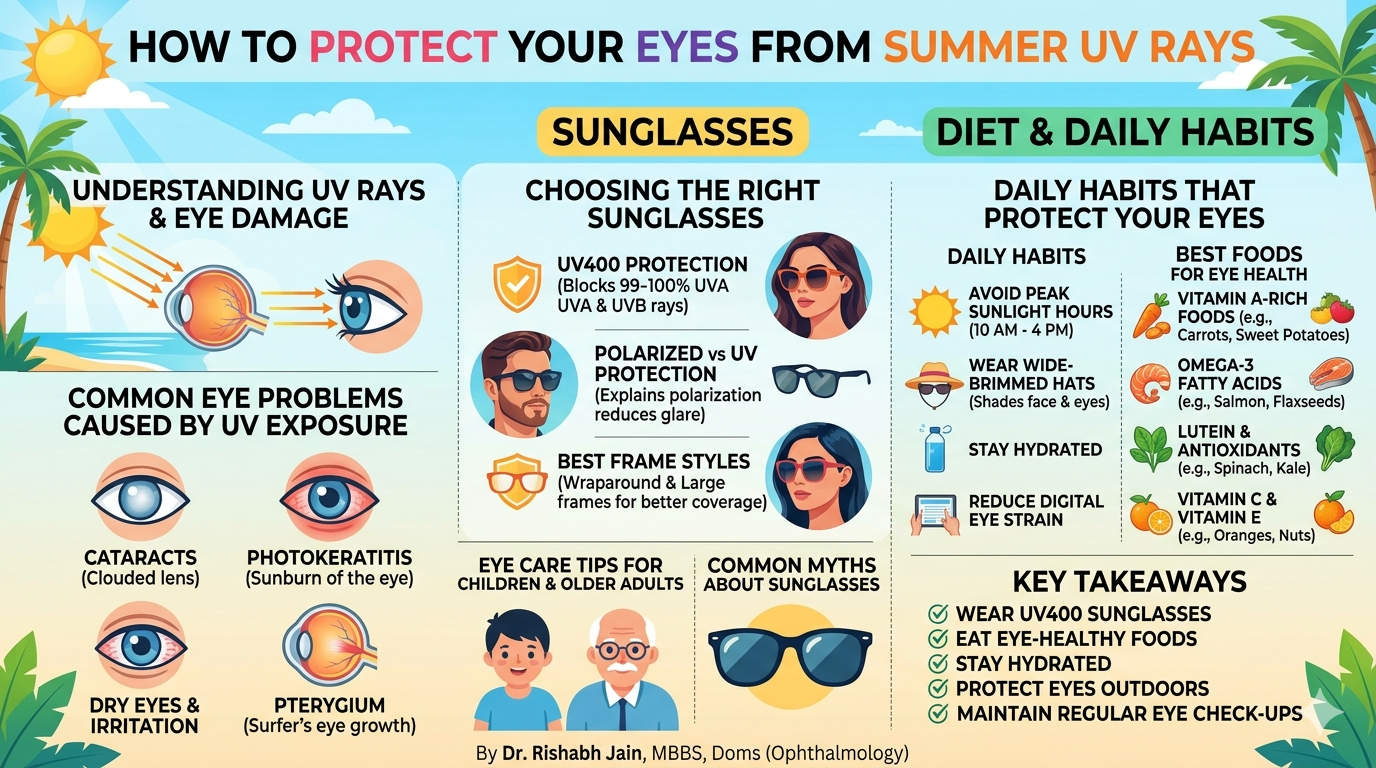
Ultraviolet (UV) rays are invisible electromagnetic rays emitted by the sun. They are divided into three types: UVA, UVB, and UVC. UVC rays are mostly absorbed by the Earth’s atmosphere, but UVA and UVB rays reach the surface and can directly affect the human body.
Your eyes are especially sensitive to UV radiation because they are exposed directly to sunlight without any natural protective barrier like skin pigmentation. Over time, UV rays can damage different parts of the eye:
- Cornea: UV exposure can cause inflammation known as photokeratitis, similar to a sunburn of the eye surface.
- Lens: Long-term exposure contributes to cataracts, where the lens becomes cloudy and vision becomes blurred.
- Retina: Chronic UV exposure may increase the risk of macular degeneration, a condition that affects central vision.
Short-term exposure may cause symptoms like redness, watering, light sensitivity, and temporary blurred vision. However, the bigger concern is cumulative damage, which builds up silently over years.
That is why consistent protection is essential—not just during peak summer, but throughout the year.
1. Choosing the Right Sunglasses for UV Protection
Sunglasses are the most important and effective protection against UV rays. However, not all sunglasses provide real protection. Many dark-colored lenses only reduce brightness but do not block UV radiation.
When choosing sunglasses, always check for:
- 100% UVA and UVB protection
- Or a UV400 rating, which blocks almost all harmful UV rays
Dark lenses without UV protection can actually be harmful because they make your pupils widen, allowing more UV rays to enter the eyes.
Another important factor is lens design. Wraparound sunglasses are highly effective because they prevent sunlight from entering from the sides. Larger lenses also protect the delicate skin around the eyes.
Polarized lenses are useful for reducing glare from reflective surfaces like water, roads, and sand. While polarization does not block UV rays directly, it improves visual comfort and reduces strain during outdoor activities.
Wearing sunglasses should become a daily habit, just like wearing sunscreen.
2. Using Hats and Physical Barriers for Extra Protection
While sunglasses protect your eyes directly, adding a physical barrier such as a hat provides extra defense. A wide-brimmed hat can significantly reduce the amount of sunlight reaching your eyes and face.
Hats with at least a 3–4 inch brim are especially effective in blocking overhead sunlight. This is particularly useful in places like beaches, mountains, and open roads where sunlight exposure is intense.
Combining sunglasses with a hat creates a double-layer protection system, reducing UV exposure by a large margin.
Even simple accessories like caps or umbrellas can help in extreme sunlight conditions.
3. Avoiding Peak UV Hours of the Day
UV radiation is strongest between 10 AM and 4 PM, when the sun is at its highest point in the sky. During this time, UV rays travel more directly to the Earth’s surface, increasing exposure levels.
Whenever possible, try to limit outdoor activities during these peak hours. If you must go outside, ensure you are properly protected with sunglasses, hats, and shaded areas.
Planning outdoor activities early in the morning or later in the evening is a simple but highly effective way to reduce UV exposure naturally.
4. Hydration and Eye Moisture Balance
Hot summer weather increases the risk of dehydration, which directly affects eye comfort. When the body is dehydrated, tear production decreases, leading to dryness, irritation, and sensitivity to light.
Proper hydration helps maintain the tear film layer, which protects and lubricates the surface of the eyes. This layer is essential for comfort and clear vision.
To keep your eyes healthy during summer:
- Drink enough water throughout the day
- Avoid excessive caffeine or alcohol
- Include water-rich fruits like watermelon and oranges
Hydration is a simple but often ignored factor in eye protection.
5. Eating Foods That Naturally Protect Your Eyes
Nutrition plays a major role in protecting your eyes from UV damage. Certain nutrients act as natural antioxidants, reducing oxidative stress caused by sunlight exposure.
Key eye-protective nutrients include:
- Vitamin C: Helps protect eye tissues from UV damage
- Vitamin E: Supports cell repair and reduces oxidative stress
- Lutein and Zeaxanthin: Act as natural UV and blue light filters in the retina
- Beta-carotene (Vitamin A precursor): Supports overall eye surface health
- Omega-3 fatty acids: Reduce inflammation and support tear production
Best summer-friendly foods include:
- Spinach, kale, and leafy greens
- Carrots and sweet potatoes
- Citrus fruits like oranges and lemons
- Nuts and seeds
- Fatty fish like salmon and sardines
A balanced diet helps your eyes build natural resistance against UV-related damage over time.
6. Using Artificial Tears for Dry and Irritated Eyes
Summer heat, dust, wind, and air conditioning can all contribute to dry eyes. UV exposure can make this condition worse by disturbing the natural tear film.
Artificial tear drops help restore moisture and reduce irritation. They act as a lubricant and protect the surface of the eyes from environmental stress.
However, it is important to:
- Use preservative-free drops for regular use
- Avoid overuse without medical advice
- Consult an eye specialist if dryness becomes chronic
Artificial tears are a supportive tool, not a permanent solution.
7. Protecting Eyes During Screen Use
Although UV rays come from the sun, modern lifestyles include heavy screen usage, which adds additional eye strain. While this is not UV-related, it increases overall eye fatigue, making eyes more sensitive to sunlight.
To reduce digital eye strain:
- Follow the 20-20-20 rule
- Adjust screen brightness properly
- Avoid using screens in complete darkness
- Take regular breaks
Healthier eyes are better able to tolerate outdoor exposure as well.
8. Contact Lens Care During Summer
Contact lens users must take extra precautions during summer. Dry heat, dust, and UV exposure can increase the risk of irritation and infection.
Some modern lenses offer UV protection, but they do not replace sunglasses because they do not cover the entire eye area.
Important habits include:
- Clean lenses properly
- Avoid wearing them for too long in outdoor heat
- Never sleep with lenses unless prescribed
- Use glasses when possible during heavy sun exposure
Proper hygiene is essential to prevent complications.
9. Importance of Sleep for Eye Recovery
Sleep allows the eyes to recover from daily exposure to sunlight, dust, and screen strain. During sleep, the eyes repair tissues, restore moisture balance, and reduce inflammation.
Lack of sleep can make eyes more sensitive to light and increase irritation caused by UV exposure.
Getting 7–8 hours of quality sleep daily supports long-term eye health and improves comfort during the day.
10. Regular Eye Checkups for UV Damage Prevention
UV damage develops slowly and often shows no early symptoms. That is why regular eye checkups are important.
Eye specialists can detect early signs of:
- Cataracts
- Corneal damage
- Retinal stress
Early detection allows timely treatment and prevents long-term vision loss.
Annual eye exams are especially important for people who spend a lot of time outdoors.
Conclusion
Protecting your eyes from summer UV rays is not complicated, but it requires consistency. Since UV damage builds up silently over time, daily habits matter more than occasional protection.
Wearing UV-protected sunglasses, using hats, avoiding peak sunlight hours, staying hydrated, and eating nutrient-rich foods all work together to protect your vision. Supporting habits like good sleep, proper screen use, and regular eye checkups further strengthen eye health.
Your eyes are one of your most valuable organs, and once damaged, vision loss is often irreversible. By following simple but effective protection strategies every day, you can enjoy summer safely while preserving clear and healthy vision for the future.