Introduction
Sports are one of the best ways to stay healthy, build strength, and improve mental focus. Whether it is cricket, football, basketball, badminton, cycling, or martial arts, physical activity improves fitness and discipline. However, while most athletes focus on performance, many ignore an important part of safety: eye protection.
Eye injuries in sports are more common than most people realize. They can happen in a split second due to fast-moving balls, accidental collisions, flying equipment, or unexpected impacts. What makes these injuries serious is that even a small accident can sometimes lead to long-term vision problems or permanent damage if not treated properly.
The good news is that most sports-related eye injuries are preventable. With proper protective gear, awareness, training, and habits, athletes can significantly reduce their risk. In this guide, we will explore how to prevent eye injuries in sports, understand common risks, and learn practical steps to protect vision during physical activity.
Understanding Eye Injuries in Sports
Eye injuries in sports occur when an external force directly or indirectly impacts the eye area. These injuries can affect different parts of the eye, including the cornea, retina, eyelids, and surrounding bones.
Sports-related eye injuries can range from mild irritation to severe trauma. Some injuries heal quickly, while others may require medical treatment or even surgery.
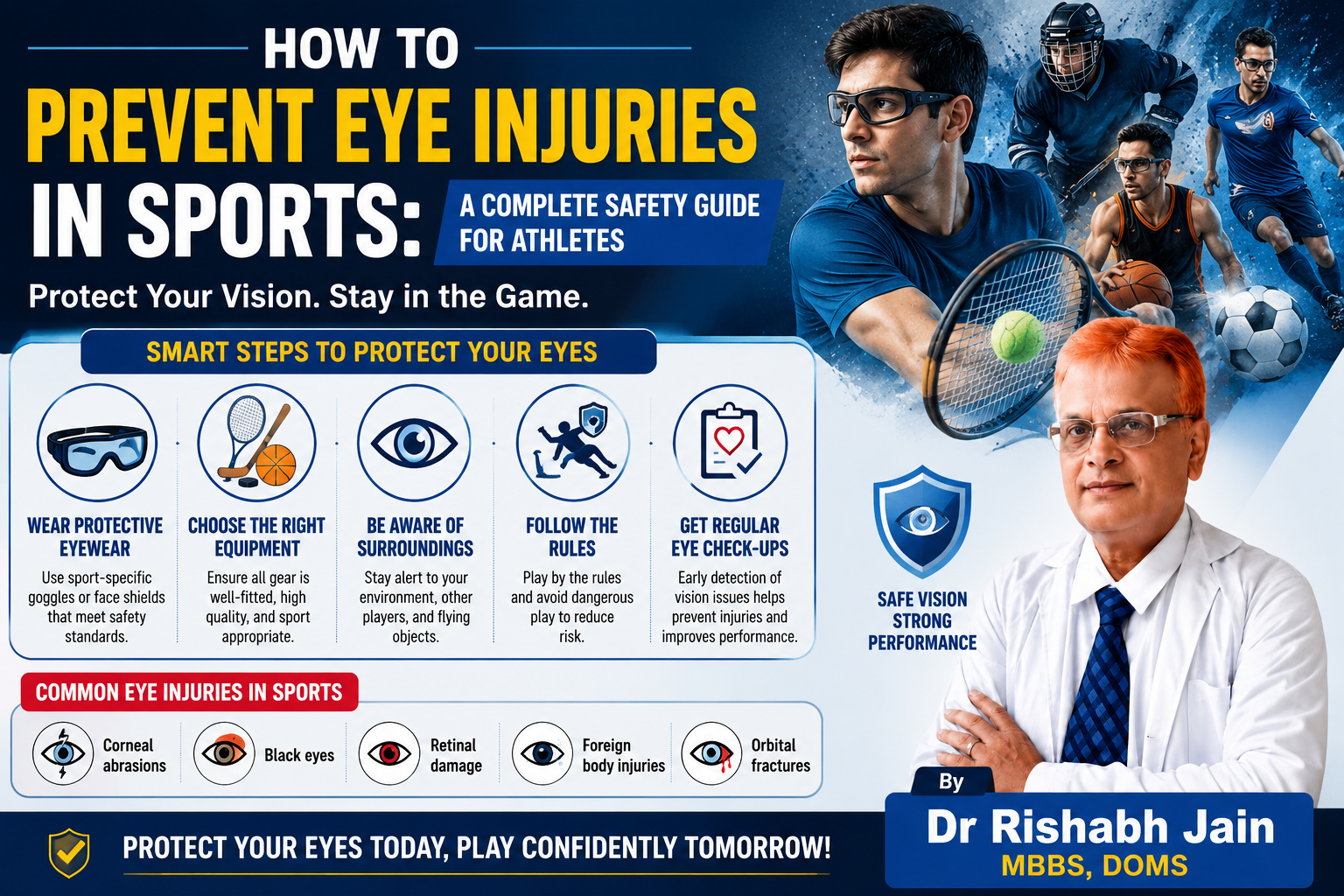
Common types of sports eye injuries include corneal abrasions, which are scratches on the surface of the eye caused by dust, fingers, or minor impact. Blunt trauma injuries occur when a ball, elbow, or object hits the eye with force, potentially causing swelling or internal damage. Penetrating injuries are more serious and occur when a sharp object enters the eye area. In severe cases, retinal damage or detachment may occur, affecting vision permanently.
Even injuries that seem minor should not be ignored, as symptoms can worsen without proper care.
Sports with Higher Risk of Eye Injuries
Some sports carry a higher risk of eye injuries due to speed, contact, or equipment use. Understanding these risks helps athletes take better precautions.
Cricket is one of the most common sports where eye injuries occur due to fast bowling speeds and hard ball impact. Football (soccer) involves frequent physical contact, accidental elbows, and collisions that can affect the eye area. Basketball has a high risk of finger pokes and accidental hits during close contact. Badminton and tennis involve fast-moving shuttlecocks and balls that can directly strike the face. Martial arts and boxing involve direct physical strikes, making eye protection extremely important. Cycling and motor sports expose the eyes to wind, dust, insects, and potential accidents at high speed.
Each sport has unique risks, so protective strategies should be adapted accordingly.
1. Wearing Proper Protective Eyewear
The most effective way to prevent eye injuries in sports is by wearing protective eyewear designed specifically for athletic use. Regular glasses are not safe for sports because they can break easily and may increase injury risk.
Sports goggles are made from impact-resistant materials such as polycarbonate, which can withstand high force without shattering. Good sports eyewear should fit securely, provide clear vision, and stay stable during movement.
For outdoor sports, UV protection is also important because sunlight exposure can damage the eyes over time. Anti-fog coatings help maintain clear vision during intense physical activity.
Wearing proper eyewear significantly reduces the risk of direct eye injuries in almost all sports.
2. Using Helmets and Face Protection
In high-impact sports like cricket, hockey, baseball, and martial arts, helmets with face protection are essential. A helmet alone protects the head, but not the eyes, which remain vulnerable without a face guard.
Face shields or grills help block fast-moving objects such as balls, sticks, or accidental contact from opponents. They are especially important for goalkeepers, batsmen, and close-range fielders.
Proper fitting is important because loose helmets or face guards can shift during movement, reducing protection.
3. Following Safety Rules and Fair Play
Every sport has rules designed to protect players from injury. Following these rules is one of the simplest ways to prevent eye injuries.
Unsafe behavior such as intentional physical contact, reckless movement, or ignoring game regulations increases the risk of accidents. Coaches and referees play an important role in ensuring fair play and maintaining safety standards.
Respecting boundaries and maintaining discipline during gameplay helps reduce unnecessary injuries.
4. Improving Awareness and Focus During Play
Many eye injuries occur due to lack of awareness during fast-paced situations. Athletes must stay alert to the movement of the ball, equipment, and other players at all times.
Good visual awareness helps players react quickly and avoid unexpected collisions. Training the eyes and brain to track fast objects can improve safety and performance at the same time.
Maintaining focus during gameplay is just as important as physical skill.
5. Training with Proper Technique
Incorrect techniques can increase the risk of accidental injuries. Proper training helps athletes learn safe movements and reduce risky behavior during play.
Coaches should teach correct posture, timing, and positioning for each sport. Warm-up exercises and practice drills improve coordination and reaction time, which helps prevent accidents.
Good technique not only improves performance but also protects the eyes and overall body.
6. Keeping Sports Equipment in Good Condition
Damaged or poor-quality equipment can increase injury risk. A cracked helmet, broken racket, or worn-out ball can behave unpredictably during play.
Athletes should regularly inspect their gear before use. Any damaged equipment should be repaired or replaced immediately. Using certified sports equipment ensures better safety and reliability.
Proper maintenance is a simple but important part of injury prevention.
7. Protecting Eyes from UV Rays During Outdoor Sports
Outdoor sports expose athletes to sunlight for long periods. Ultraviolet (UV) rays can damage the eyes over time and increase the risk of conditions such as cataracts and photokeratitis.
Wearing UV-protected sports sunglasses or goggles helps reduce exposure. UV400-rated eyewear provides strong protection against harmful rays.
This is especially important in sports like cycling, running, cricket, and water sports where sunlight reflection is strong.
8. Avoiding Distractions During Sports Activities
Distractions during sports can lead to delayed reactions and accidents. Talking during critical moments, checking mobile phones, or losing focus can increase the risk of eye injuries.
Athletes should remain fully engaged during practice and matches. Concentration helps improve reaction time and reduces unexpected collisions.
Mental focus is a key part of sports safety.
9. First Aid for Eye Injuries
Even with precautions, accidents can still happen. Knowing basic first aid for eye injuries is essential.
If an eye injury occurs, the first step is to avoid rubbing or pressing the eye, as this can worsen damage. If there is dust or small particles, the eye should be gently rinsed with clean water. If the injury is caused by a strong impact, swelling, or bleeding, immediate medical attention is required.
In severe cases, delaying treatment can lead to long-term vision problems, so quick action is very important.
10. Regular Eye Checkups for Athletes
Regular eye examinations help ensure good vision and detect hidden problems early. Many athletes may not realize they have minor vision issues that can increase injury risk during sports.
Eye checkups help assess visual clarity, depth perception, and overall eye health. If needed, doctors may recommend corrective lenses or sports-specific eyewear.
Good vision is essential for safe and effective sports performance.
Conclusion
Eye injuries in sports are serious but highly preventable. Most accidents occur due to lack of protection, poor awareness, or unsafe practices. By using proper protective eyewear, following safety rules, maintaining focus, and using well-maintained equipment, athletes can significantly reduce their risk of injury.
Sports should be enjoyed with confidence and safety. Protecting your eyes is not just about preventing injury—it is about preserving your long-term vision and quality of life.
In every sport, skill matters, but safety matters even more. Wearing the right protection and staying aware ensures that you can continue playing safely for years to come.