Presbyopia is an age-related condition in which the eye’s lens gradually loses flexibility, reducing near focusing ability.
1. Early symptoms include difficulty reading small print, holding material farther away, and eyestrain during close work.
2. Progressive stages may cause blurred near vision, need for brighter light, headaches, and slower focus shift between near and distant objects.
While distance vision remains mostly normal, presbyopia gradually impacts daily near tasks, making reading, writing, and close-up activities more challenging.
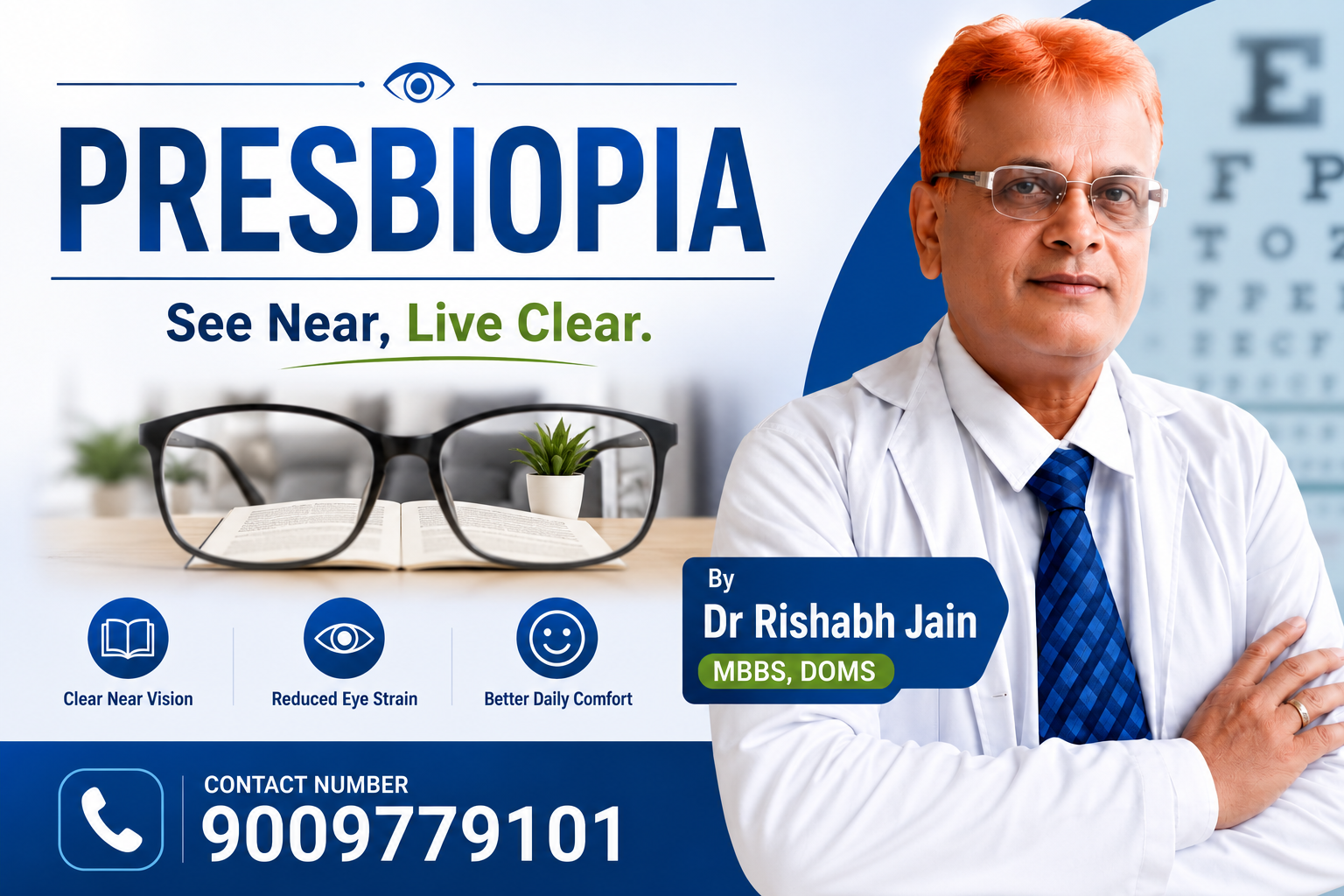

Presbyopia is an age-related eye condition in which the natural lens of the eye gradually loses its ability to focus on nearby objects. The lens, normally flexible and elastic, becomes stiffer over time, reducing its capacity to change shape and adjust focus for close-up tasks. This condition is a natural part of the aging process and generally becomes noticeable in individuals during their early to mid-40s.
Presbyopia affects the eye’s focusing mechanism, known as accommodation, and is distinct from other refractive errors such as myopia, hyperopia, or astigmatism, although these conditions can occur alongside it. The changes involve gradual stiffening of the lens and weakening of the ciliary muscles that control lens shape. Environmental factors, genetics, and overall eye health may influence the progression of presbyopia.
Diagnosis is made through a comprehensive eye examination, including evaluation of near visual acuity and testing the lens’s ability to adjust focus. Traditional management includes corrective reading glasses, bifocals, or multifocal lenses. In some cases, specially formulated medications may help improve the lens’s focusing ability. We treat you with medicine only, without laser, offering a safe, non-invasive approach to manage presbyopia while preserving natural vision.

